How-to
How to wash and iron finished cross stitch and embroidery
Published
As an Amazon Associate we earn from qualifying purchases. This does not change our picks. Affiliate disclosure
New to Prime? Try Prime free for fast, free shipping on eligible items.
Short answer
Hand wash finished cross stitch or embroidery in cold water with a small amount of non-biological detergent, then rinse cold until the water runs clear. Roll it between two towels without wringing, let it air dry until damp, and press it face down between towels with a warm iron, never a hot one. Stop washing if any color runs.
Gear for this job
All 7 picks comparedDMC six-strand floss, 36 popular colors, 8.7 yd
See price on AmazonSee it on AmazonDMC embroidery floss assortment, 100 colors
See price on AmazonSee it on AmazonAnchor stranded cotton floss, 50 skeins, 8 m
See price on AmazonSee it on Amazon
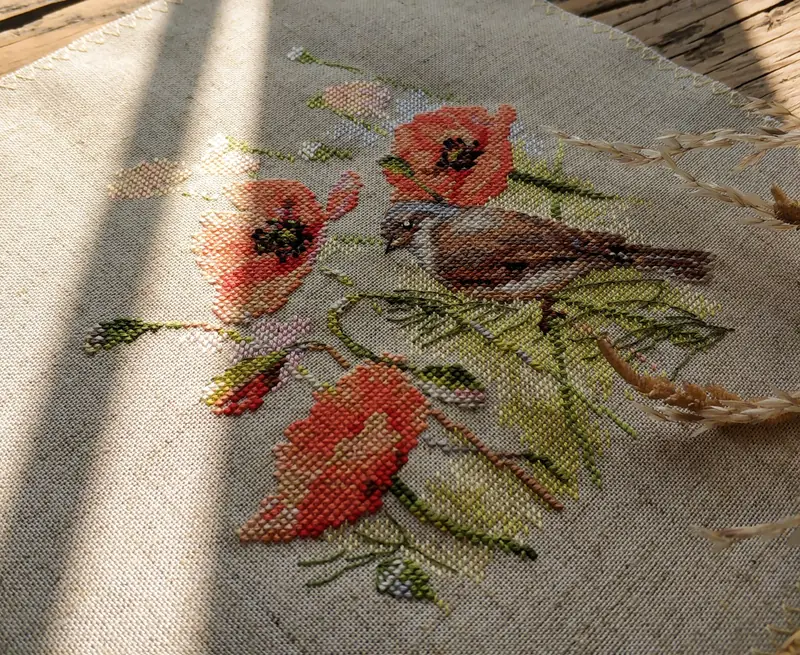
This is for a finished hand-stitched piece with hoop marks, pattern lines or hand oils on it, before it is framed or backed. Three things decide how it goes: whether the floss is colorfast, whether the water stays cold, and how the piece is dried and pressed. Branded cotton floss such as DMC is sold as colorfast. Hand-dyed and unbranded floss may not be, and needs a test before the whole piece gets wet. A clean piece that will only hang on a wall does not have to be washed at all.
How to clean finished cross stitch: what to check first
Look at what is in the piece before it touches water. Cotton floss on cotton aida, evenweave or linen is washable. The risks are thread that is not colorfast and anything added to the fabric along the way, such as pen lines or stabilizer.
| What is in the piece | Test first? | What to do |
|---|---|---|
| DMC six-strand cotton floss | Optional | Sold as colorfast. Wash as below and watch the rinse water. |
| Hand-dyed or overdyed floss | Yes | May not be colorfast. Test every color. If one runs, keep the piece dry. |
| Unbranded or unlabeled floss | Yes | Colorfastness unknown. Test the darkest and brightest shades first. |
| Heat-erasable pen lines | No | They vanish with heat at about 140 F (60 C), so the pressing step clears them. |
| Stick and stitch stabilizer | No | Must be rinsed out. Follow the sheet's instructions for water temperature. |
Is DMC embroidery floss colorfast? How to test any thread
DMC states that its six-strand cotton floss is made with colorfast dyes and that its threads are tested for colorfastness and fade resistance. That is the maker's statement about its own thread, not a rule for all embroidery floss. Floss from hand-dyers and unbranded floss with no label may not be colorfast. When you do not know what a thread is, test it before washing.
- 1
Dampen a white cotton cloth or cotton swab with cold water. It should be wet but not dripping.
- 2
Press it firmly on the back of the work over one color for a few seconds, then lift it and look at the cloth in good light.
- 3
Repeat for every color, starting with the darkest shades and the reds. If you have leftover thread, wet a short piece and press it between 2 sheets of white paper towel instead.
- 4
Any tint on the white cloth means that color runs. Do not wash the piece. Leave it unwashed, or clean only bare fabric well away from that color.
How to wash your cross stitch, step by step
Wash one piece at a time, by hand, in a clean sink or bowl. Take it out of the hoop or frame first. Use non-biological detergent, which means one without enzymes, and only a little of it. Have two clean towels ready before you start, white ones if you have them.
- 1
Hold the piece under cold running water until it is wet through. Watch the water as it runs off: if it is colored, stop and go to the section on floss bleed below.
- 2
Fill a bowl with cold water and add a small amount of non-biological detergent: a few drops of liquid is enough for one bowl. Swish to mix.
- 3
Lower the piece in and move it gently through the water with your hands. Do not rub, scrub or twist the stitching. For a mark on bare fabric, dab it lightly with a fingertip.
- 4
Rinse under cold running water until the water runs clear and no suds are left.
- 5
Lay the piece flat on one clean towel, put the second towel on top and roll the layers up together. Squeeze the roll gently. Do not wring it.
- 6
Unroll, move the piece to a dry towel and let it air dry flat until it is damp, not fully dry. Then press it as described in the next section.
Note.No bleach, no biological powder, no harsh detergent and no dry cleaning. Do not wash the piece together with other items.
Should I iron embroidery? Yes, face down and while damp
Pressing while the fabric is still damp takes out hoop creases and leaves the fabric flat for framing. The stitches themselves must not be flattened, so the piece is pressed face down on something soft. A towel lets the stitches sink in while the iron smooths the fabric around them.
- 1
Lay a clean towel on the ironing board and place the damp piece on it face down. Cover the back with a second clean towel.
- 2
Set the iron to warm, never hot. Press with light pressure, lifting and lowering the iron instead of pushing it across the fabric.
- 3
For a stubborn crease, such as an old hoop ring, use the steam setting on the iron and press that area again.
- 4
Leave the piece lying flat until it is fully dry before it goes into a frame or back into a hoop.
Note.Hoop creases are easier to prevent than to press out. Take the work out of the hoop between sessions.
How to fix floss bleed on cross stitch fabric
If the water turns colored at any point, stop washing. Add no more detergent and do not rub. Hold the piece under cold running water and keep rinsing until the water runs clear. Running water carries the loose dye away instead of letting it settle into the fabric.
Do not let the piece dry with color still in the fabric, and do not iron it. Drying and heat make a dye mark harder to shift. If a tint remains after rinsing, common hobby practice is to soak the piece in a bowl of fresh cold water and change the water each time it colors, until it stays clear. This is not guaranteed. Dye that has dried into the fabric may not come out.
Note.Bleach is not a fix for a bleed. It attacks the floss colors as well as the stain, and it is on the list of things never to use on needlework.
Hoop marks, hand oils and pattern lines: what washing removes
Washing deals with what the stitching process leaves behind. It does not correct the stitching itself. Know which problem you have before the piece gets wet.
- Hoop marks: creases from a hoop left on between sessions relax when the fabric is wet and press out while it is damp.
- Hand oils and dust from handling: the detergent wash lifts them. This is the main reason to wash a piece that looks clean.
- Wash-away stabilizer and water-soluble pen: both need the rinse, so these pieces have to be washed. They need washable fabric and colorfast thread, as the stick and stitch guide explains.
- Puckers: washing and pressing flatten mild rippling in the fabric, but not stitches that were pulled too tight. See why embroidery puckers.
How to tell the piece is clean and ready to frame
The job is done when the piece passes all four checks below. Then it can be laced, framed or put back in a display hoop, as described in how to back an embroidery hoop. The other finishing steps are on the finish and care page.
- The last rinse ran clear, with no color and no suds in the water.
- The fabric lies flat, with no hoop ring or fold line visible when you look across it toward a window.
- The stitches stand up from the fabric and have not been pressed flat or shiny.
- The piece is dry all the way through. Damp fabric closed in behind glass or a hoop backing can mildew.
Quick answers
Short answers to the questions people ask before washing a finished piece. Each one is covered in more detail in the sections above.
- How do you wash cross stitch once finished? By hand in cold water with a little non-biological detergent. Rinse cold until clear, roll in two towels, then press face down while damp.
- Should I iron embroidery? Yes: face down between two clean towels, with a warm iron and light pressure. Never use a hot iron.
- Is DMC embroidery floss colorfast? DMC sells its six-strand cotton floss as colorfast. Hand-dyed and unbranded floss may not be, so test those first.
- How do you fix floss bleed on cross stitch fabric? Stop washing and rinse under cold running water until it runs clear. Keep the piece wet and away from heat until the color is out.
What you need for this
- See price on AmazonAmazon
DMC six-strand floss, 36 popular colors, 8.7 yd
From Best embroidery floss for hand embroidery: brand sets compared
- See price on AmazonAmazon
Nurge square plastic embroidery hoops, set of 3
From Best embroidery hoops for hand embroidery: wood vs plastic
- See price on AmazonAmazon
Sulky Stick 'n Stitch printable sheets, 12 pack
From Best water soluble embroidery paper for transferring patterns
- See price on AmazonAmazon
Q-Snap Needlework Frame Bundle, 3 Sizes
From Best cross stitch frames: Q-Snap frames and scroll frames compared