Explainer
Can you embroider without a hoop? When it works and when it does not
Published
As an Amazon Associate we earn from qualifying purchases. This does not change our picks. Affiliate disclosure
New to Prime? Try Prime free for fast, free shipping on eligible items.
Short answer
Yes. Hand embroidery and cross stitch work without a hoop on fabric stiff enough to hold its own shape, such as aida, felt and denim. Thin or stretchy fabric puckers when it is stitched in the hand, so it needs a hoop, a frame or a stabilizer. A hoop does one job: it keeps the fabric taut so every stitch is pulled to the same tension.
Gear for this job
All 5 picks comparedQ-Snap Needlework Frame Bundle, 3 Sizes
See price on AmazonSee it on AmazonQ-Snap Frame Set, 11 x 11 in with 14 x 14 Kit
See price on AmazonSee it on AmazonBeech Needlepoint Scroll Frame, 15.7 x 22 in
See price on AmazonSee it on Amazon
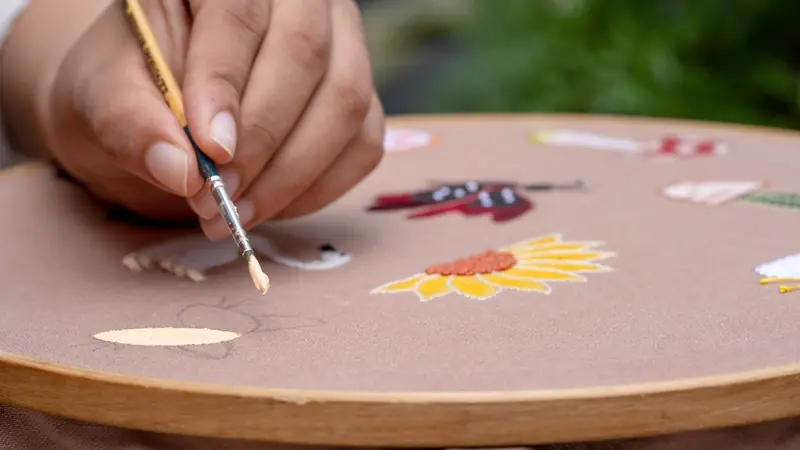
This page is for hand stitching with no hoop to hand, or with a hoop that is more trouble than help: it marks the fabric, tires the hand, or will not fit the item being stitched. Three things decide whether going without works. The first is how stiff the fabric is. The second is the stitch, because short stitches forgive slack fabric and long ones do not. The third is how lightly you pull the thread. Get those right and stitching in the hand is a normal way to work, not a shortcut.
Why do you need an embroidery hoop?
Every stitch pulls on the fabric. In a hoop the fabric is held taut, so it resists that pull and the stitch settles flat on the surface. In the hand the fabric is slack, and a stitch pulled even slightly too tight gathers the cloth under it. Repeat that a few hundred times and the piece puckers.
Tight stitches and slack fabric are the first two causes on the list in why is my embroidery puckering. A hoop removes the slack. Without one, the fabric has to resist the pull by its own stiffness, or you have to control the pull with your hands. That is why the answer depends on the fabric.
Which fabrics can you embroider without a hoop?
The stiffer and denser the fabric, the less it needs a hoop. Use the table as a starting point. A light hand on the thread moves a fabric up a row, and long stitches or many strands move it down.
| Fabric | Without a hoop? | Why, and what to use otherwise |
|---|---|---|
| Aida, 11 to 18 count | Yes | Stiff, open weave holds its shape in the hand |
| Felt | Yes | Dense and firm, usually stitched in the hand |
| Denim and canvas | Yes | Heavy weave resists the pull of the thread |
| Evenweave and linen for counted work | Possible, harder | Softer than aida. A hoop or frame keeps the stitches even |
| Plain cotton or linen for surface embroidery | Not recommended | Puckers under satin stitch and other long stitches. Use a hoop |
| Thin cotton such as lawn or voile | No | Too light to resist any pull. Hoop it, with a backing layer or stabilizer |
| T-shirt knit and other stretch fabric | No | Stretches as you stitch. Stabilizer first, then a hoop |
Can you cross stitch without a hoop?
Yes, and on aida it is common. 14 count aida, the usual beginner fabric, is stiff enough to hold flat between the fingers. Find the center by folding the fabric in half twice, start there, and roll or fold the spare fabric into the holding hand as the work grows.
Stitching in the hand also changes the movement. On a drum-tight hoop the needle goes down and comes up in two separate motions. On loose fabric it can go in and out in one pass, the way a sewing stitch does. That sewing motion is not possible on drum-tight fabric. The cost is tension: crosses pulled unevenly look thin or lopsided, one of the causes in why does my cross stitch have gaps. Evenweave and linen are softer than aida and are easier to keep even on a frame.
How to embroider without a hoop: the in-hand method
The hand that holds the fabric does the work of the hoop. It keeps a small area flat and lightly stretched, just where the needle is going in, and moves along with the stitching.
- 1
Hold the fabric in the hand you do not stitch with and stretch the working area lightly between the thumb and fingers, about 1 to 2 in across. Keep it flat, not bent over a fingertip.
- 2
Cut the thread to at most 18 in (50 cm). A long thread drags and tempts a harder pull. The reasons are in how long should embroidery thread be.
- 3
Pull each stitch only until the thread lies on the fabric, then stop. If the cloth dimples around the stitch, it is too tight: ease it back with the needle tip.
- 4
Choose short stitches where the design allows: back stitch, stem stitch, chain stitch and cross stitch all cope well. Save long satin stitches for hooped fabric.
- 5
After every 10 to 20 stitches, lay the work flat on a table. If it ripples, loosen or unpick the last few stitches now. Mild ripples may press out damp later, but stitches pulled too tight have to be redone.
Note.Do not carry the thread far across the back when stitching in the hand. A long carry acts like a drawstring on slack fabric and pulls two parts of the design toward each other.
Alternatives to a hoop: Q-Snap, scroll frame and stabilizer
If the hoop is the problem and not tension itself, three other tools keep fabric flat. Two are frames that replace the hoop. The third stiffens the fabric so it behaves more like aida.
- Q-Snap frame: a square or rectangle of plastic tubes with ribbed clamps that snap over the fabric. Common sizes are 6x6, 8x8, 11x11, 11x17 and 17x17 in, measured on the outside. No screw to work loose.
- Scroll frame: the fabric is fixed to two roller bars and wound until taut, with only the working section exposed. It suits long cross stitch pieces and holds the whole width at once.
- Stabilizer: self-adhesive wash-away sheets ("stick and stitch") add body to thin or stretchy fabric and carry the printed design. They need washable fabric and colorfast thread, because the sheet is rinsed away at the end.
When a hoop is still the better choice
Use a hoop for thin fabric, for satin stitch and other long stitches, and for a first project, when stitch tension is not yet steady. Taut fabric hides a lot of uneven pulling. Loading one takes a minute or two, and the steps are in how to use an embroidery hoop.
Most complaints about hoops have a fix that is smaller than giving them up. Ring marks come from leaving the work in the hoop: take it out between sessions. A sore hand usually means the hoop is too big to grip, and 6 to 7 in is the comfortable size to hold, as the hoop size chart shows. Fabric that will not stay tight is a fault in the hoop, covered in embroidery hoop won't tighten.
Quick answers
The short version for anyone deciding whether to buy a hoop before starting a project, or whether to keep going without one.
- Do I need a hoop to embroider? Not on stiff fabric such as aida, felt or denim. On thin or stretchy fabric, yes, or the stitching puckers.
- Can you cross stitch without a hoop? Yes. Aida is stiff enough to stitch in the hand, and 14 count is the easiest place to start.
- Do you need an embroidery hoop for cross stitch on linen? It is not required, but linen and evenweave are softer than aida, so a hoop or frame makes even stitches easier.
- Why do you need an embroidery hoop? To keep the fabric taut, so each stitch is pulled to the same tension and the cloth does not gather under it.
- How do you embroider without a hoop? Hold a small area flat between thumb and fingers, use short stitches and a thread of at most 18 in, and pull lightly.
What you need for this
- See price on AmazonAmazon
Q-Snap Needlework Frame Bundle, 3 Sizes
From Best cross stitch frames: Q-Snap frames and scroll frames compared
- See price on AmazonAmazon
Sulky Stick 'n Stitch printable sheets, 12 pack
From Best water soluble embroidery paper for transferring patterns
- See price on AmazonAmazon
Nurge square plastic embroidery hoops, set of 3
From Best embroidery hoops for hand embroidery: wood vs plastic
- See price on AmazonAmazon
DMC GD1436-0322 Gold Label Aida Fabric, 14 Count
From Best 14 count aida cross stitch fabric: brands, cuts and colors