Is cross stitching hard to learn?
Published
As an Amazon Associate we earn from qualifying purchases. This does not change our picks. Affiliate disclosure
New to Prime? Try Prime free for fast, free shipping on eligible items.
Gear for this job
All 7 picks comparedSnowman Counted Cross Stitch Kit with Hoop
See price on AmazonSee it on AmazonKraftex Stamped Cross Stitch Kit, Rose Poppy
See price on AmazonSee it on AmazonDesign Works Friends Cross Stitch Kit
See price on AmazonSee it on Amazon
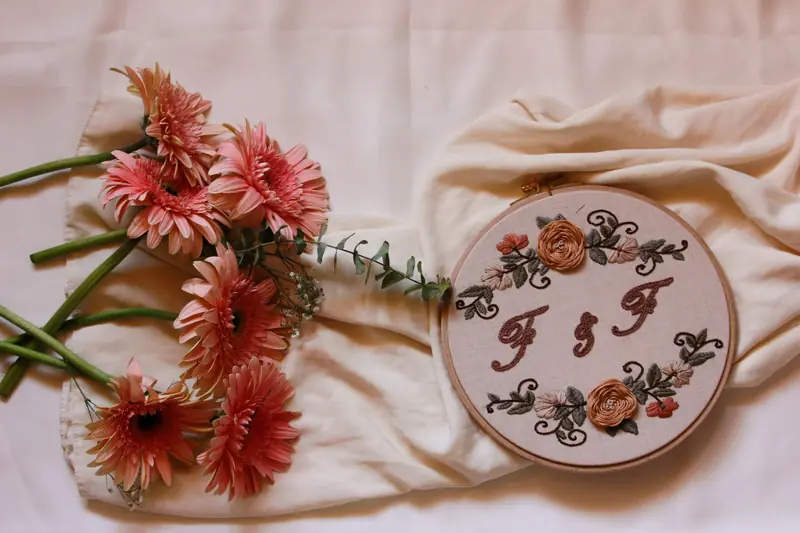
No, cross stitching is not hard. The whole craft is built on one stitch, an X made of two diagonal half stitches, placed square by square on fabric that already has a grid of holes. Most people can make a neat X within ten minutes. What takes practice is everything around the stitch: counting accurately from a chart, keeping every top leg facing the same way, managing floss so it does not knot, and working on finer fabric as your eyes allow. Pick the right first project and none of those becomes a real obstacle.
Why the basic stitch is easy
Aida cloth, the standard cross stitch fabric, is woven in little blocks with a clear hole at each corner. Each square on the chart equals one block on the fabric, and each X goes from one corner hole to the opposite corner, then crosses back. There is no judgment about stitch length or angle as there is in freestyle embroidery, because the fabric decides both. On 14 count aida (14 squares per inch) the holes are easy to see without magnification, and two strands of six-strand floss fill each square neatly.
The needle helps too. Cross stitch uses a blunt tapestry needle, size 24 for 14 count, which slides into the existing holes instead of piercing the threads. That makes it hard to split fibers by accident and very hard to prick yourself. If you can thread a needle and count to ten, you have the physical skills the craft needs.
The parts that take practice
Counting is where most beginners lose time. Charts mark every tenth line in bold, and the trick is to count from those lines rather than from your last stitch. A miscount of one square is easy to make and easy to fix if you catch it early, but it can throw off a whole section if you do not. Checking your position against a bold line every few minutes prevents most of the pain.
Tension is the second skill. Pull too hard and the fabric puckers and holes stretch; too loose and stitches look loopy. Keeping the fabric taut in a hoop or frame and letting the floss lie flat on the surface solves most tension problems. The third is consistency: all top legs should cross in the same direction, usually bottom left to top right underneath and bottom right to top left on top. Mixed directions make the surface look uneven even when every stitch is in the right place.
What makes a project harder
Difficulty in cross stitch comes almost entirely from the pattern and fabric, not from the stitch. Higher counts are harder on the eyes: 18 count aida has 324 squares per square inch against 196 on 14 count, and 28 or 32 count linen worked over two threads requires counting fabric threads rather than blocks. Many color changes slow you down, especially confetti stitching, where single stitches of one color are scattered across an area.
Fractional stitches (quarter and three-quarter stitches) need you to pierce the middle of an aida block, which takes a sharper eye. Backstitch outlines and French knots add a little technique. Size matters too: a 4 inch design on 14 count has at most 56 by 56 squares, about 3,100 stitches if every square were filled, while a full-coverage 16 by 20 inch piece runs into tens of thousands. Neither is hard in technique, but one finishes in a weekend and the other takes months.
How to choose an easy first project
A good first project is 14 count aida, full stitches only or with a little backstitch, a design no bigger than about 6 inches, and fewer than 15 colors. A kit is the easiest route because the floss is pre-sorted and the chart, fabric and needle match each other. Stamped kits, with the design printed on the fabric, skip counting entirely; counted kits teach chart reading, which you will need for nearly every pattern later.
If you buy supplies separately, get 14 count aida with at least 3 inches of margin on each side, a 6 to 8 inch hoop or a Q-Snap frame, a pack of size 24 tapestry needles and the floss colors listed in the chart key. Cut floss to about 18 inches; longer lengths twist and knot.
Common beginner mistakes and quick fixes
Knots on the back are the usual first complaint. Start with a loop start or by holding a tail under your first few stitches instead of tying a knot, and let the needle dangle now and then so the floss untwists. Fabric fraying at the edges is solved by taping or zigzagging the edges before you begin. Finding the center is easy: fold the fabric in half both ways and start there, matching the arrows on the chart.
If you stitch in the wrong place, unpick with the point of the needle or cut the stitches from the front with small sharp scissors and pull the pieces out from the back. Aida forgives this well. Gaps between stitches usually mean too few strands for the count, or pulling too tight; two strands on 14 count and three on 11 count cover well.
Frequently asked questions
How long does it take to learn cross stitch? Most people make even stitches within the first hour. Reading charts comfortably usually comes after one or two small projects. After that, speed and neatness improve with practice rather than with new skills.
Is cross stitch easier than embroidery? For most beginners, yes. Cross stitch uses one stitch on a fabric grid, so placement is decided for you. Freestyle embroidery uses many stitches on plain fabric, and stitch length and angle are up to you.
Can kids cross stitch? Yes. Children from about 7 can manage 11 count aida or plastic canvas with a blunt tapestry needle. Short sessions and small designs keep it fun.
Is cross stitch hard on the eyes? 14 count in good light is comfortable for most people. If 18 count or linen strains your eyes, a daylight lamp or a magnifier makes a big difference.
What you need for this
- See price on AmazonAmazon
Snowman Counted Cross Stitch Kit with Hoop
From Best cross stitch kits for beginners: small counted and stamped starters
- See price on AmazonAmazon
DMC GD1436-0322 Gold Label Aida Fabric, 14 Count
From Best 14 count aida cross stitch fabric: brands, cuts and colors
- See price on AmazonAmazon
DMC 1767-24 Tapestry Hand Needles, Size 24
From Best cross stitch needles: tapestry needles in sizes 24, 26 and 28