How to use a needle threader with embroidery floss, step by step
Published
As an Amazon Associate we earn from qualifying purchases. This does not change our picks. Affiliate disclosure
New to Prime? Try Prime free for fast, free shipping on eligible items.
Gear for this job
All 7 picks comparedBEADNOVA stainless steel needle threaders, 20 pcs
See price on AmazonSee it on AmazonDritz Hummingbird needle threader with cutter
See price on AmazonSee it on AmazonClover 8611 embroidery needle threader, flat tip
See price on AmazonSee it on Amazon
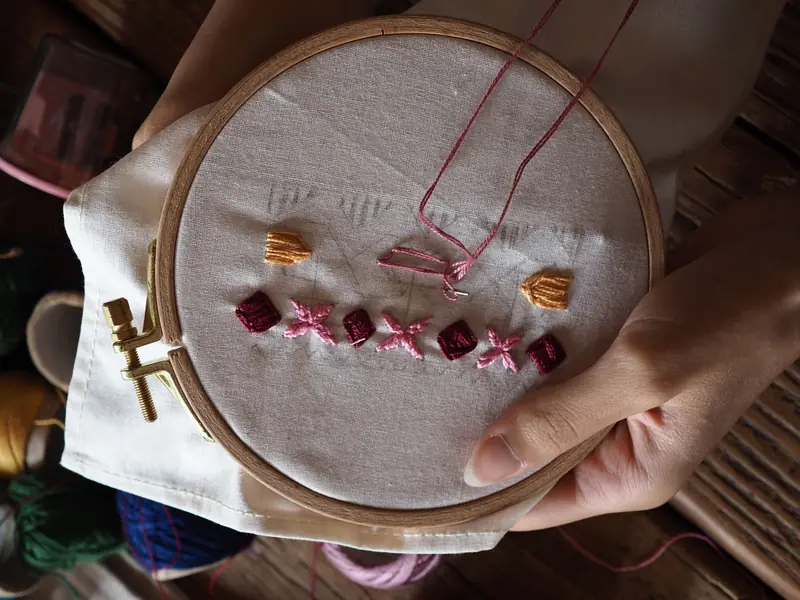
To use a needle threader, push the thin wire diamond through the eye of the needle, pass the end of your thread through the wire loop, then pull the wire back out so the thread comes with it. The thread is now through the eye and you can pull it to the length you want. With stranded floss the trick is in preparing the thread end, because a fuzzy tip is the usual reason the threader seems not to work.
The basic method in five steps
Hold the needle in your non-dominant hand with the eye facing you, and hold the threader by its handle in the other. Push the wire diamond straight through the eye until the whole loop has passed to the other side. Do not angle it, because the wire is thin and bends easily.
Feed the cut end of the thread through the wire loop, leaving about an inch of tail. Then pull the threader back out through the eye, slowly and in a straight line. The loop drags the thread through with it. Slide the thread off the wire, pull a few inches through the eye, and you are ready to stitch.
If the wire does not fit, the needle eye is too small for that threader, not a problem with your technique. Wire threaders suit eyes from a medium sewing needle up to a large embroidery needle. Very fine needles need a fine-wire threader.
Prepare the floss before you thread
Stranded floss splays at the cut end, and a splayed end will not go through a wire loop. Cut the end cleanly with sharp scissors at an angle rather than tearing or biting it. Then flatten the last quarter inch between your thumbnail and finger so the strands lie together.
If you are using several strands, separate them one at a time and put them back together, rather than pulling the whole length off the skein in one piece. That keeps the strands from twisting around each other. Threading all strands together through the loop works for two or three strands. For more strands, thread them as a flat bundle, or use a larger needle and a wider threader.
Some stitchers fold the floss over the needle and pinch it into a tiny loop, then push the loop through the eye. That works without any tool, but it is slow for thick bundles, which is why a threader is worth having.
Match the threader to the needle and thread
The needle eye decides which threader works. Crewel and embroidery needles have long, oval eyes made for several strands of floss, so a standard wire threader fits them easily. Tapestry needles used for cross stitch have a large eye and a blunt tip and usually do not need a threader for one or two strands. Fine beading or sharps in the high size numbers have small eyes that need a thin wire.
If you work with thicker thread, such as pearl cotton, a diamond wire may bend as you pull it. A wider threader or a loop-style hook with a bigger opening carries it better. Keep one fine threader and one wider one in your kit if you switch between thread types.
The hand embroidery and cross stitch needle guides below list the eye sizes, so you can match a threader to a needle before you buy either.
Fixing the usual problems
The wire snaps or kinks: the wire is thin metal and wears out. Push it through straight, never twist it in the eye, and replace the threader when the diamond no longer lies flat. Most threaders are sold in packs of several for this reason.
The thread slips off the loop: the end is too short or too fuzzy. Leave a longer tail, wet the tip lightly or flatten it, and keep the loop closed around the thread as you pull back. Pulling the wire out fast also takes the thread with it.
The loop will not enter the eye: check that you are looking at the wider side of the eye. Many needles have a slightly larger opening on one side from the stamping process. Turn the needle over and try the other face, then hold it steady against a light surface so the eye stands out.
Dull eyesight is a common reason to buy a threader in the first place. A light and magnifier on your stitching area makes threading a small eye much easier.
Threading without a threader
A sheet of paper can serve as a threader. Fold a small strip in half, lay the thread end inside the fold, and push the folded edge through the eye. The paper carries the thread through, and you pull it out the other side. It works best with a stiff, thin paper.
Another habit that saves time is to thread several needles at once at the start of a session, in the colors the pattern calls for, and park them in a needle minder or case. Threading ahead means you use the threader once per color rather than every time a thread runs out.
For cross stitch with one or two strands on a tapestry needle, moistening the tip of the flattened floss and pushing it through the large eye directly is usually fast enough without any tool.
Frequently asked questions
Does a needle threader work with all needles? No. A wire threader needs an eye large enough for the diamond to pass. Very small eyes need a thin-wire threader, and some tiny beading needles are too small for any wire model.
Can I thread more than one strand at once? Yes, within reason. Two to three strands of floss go through a standard wire loop when the ends are flattened. For six strands, use a larger-eyed needle and a threader that is wide enough, or thread the bundle as a flat ribbon.
How long does a needle threader last? The wire is thin and eventually bends or breaks, so treat threaders as a consumable. If the diamond has a kink, replace it rather than forcing it through the eye.
Do I need a dental floss threader? No. A dental floss threader is a different tool built for dental work. A needle threader has a wire loop sized for needle eyes, and it is the tool that works for embroidery.
What you need for this
- See price on AmazonAmazon
BEADNOVA stainless steel needle threaders, 20 pcs
From Best embroidery needle threaders for multi-strand floss
- See price on AmazonAmazon
Clover Gold Eye Embroidery Needles, 16 Pack
- See price on AmazonAmazon
DMC 1767-24 Tapestry Hand Needles, Size 24
From Best cross stitch needles: tapestry needles in sizes 24, 26 and 28