How to display embroidery without a hoop
Published
As an Amazon Associate we earn from qualifying purchases. This does not change our picks. Affiliate disclosure
New to Prime? Try Prime free for fast, free shipping on eligible items.
Gear for this job
All 7 picks comparedNurge square plastic embroidery hoops, set of 3
See price on AmazonSee it on AmazonCaydo beech wood embroidery hoops, 7, 8 and 9 in
See price on AmazonSee it on AmazonMufekum Beech Wood Embroidery Hoops, 4-8 in, 5 Pcs
See price on AmazonSee it on Amazon
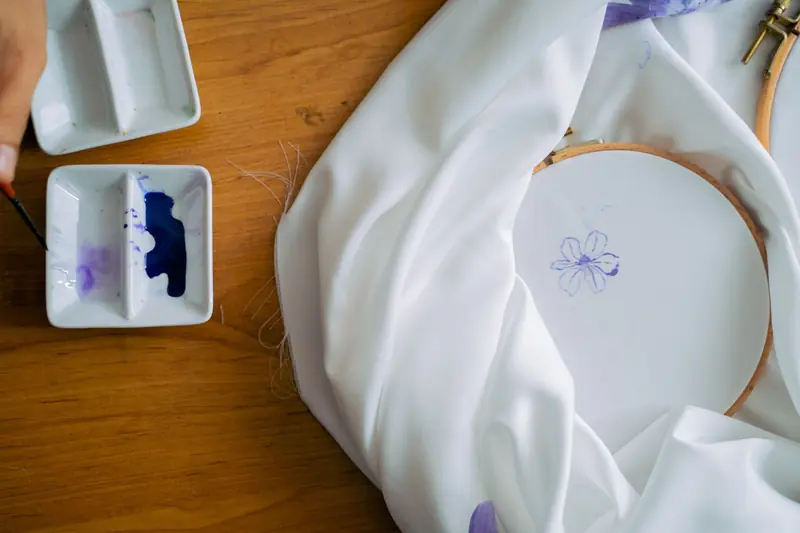
To display embroidery without a hoop, mount it on a board and put it in a picture frame, stretch it over an artist's canvas or stretcher bars, set it in a shadow box, or sew it into something usable such as a pillow, banner, tote or patch. Framing on board gives the most finished look; stretching over a canvas is the quickest frameless option. Whatever you choose, wash and press the piece first and leave enough fabric around the design for the method.
Before you start: clean, press and leave margin
Remove any visible transfer marks: water-soluble pen and stick-and-stitch stabilizer rinse out in cool water. Press the piece face down on a thick towel so the stitches keep their texture, and let it dry completely before mounting.
Check the margin. Frame mounting needs about 2 to 3 inches of fabric beyond the visible area on each side to wrap around the board. Canvas stretching needs enough to wrap around the sides and staple on the back, usually the canvas depth plus 1.5 inches on every side. If your fabric is tight, sew strips of similar fabric to the edges to extend it.
Picture frame with a mounted board
Cut acid-free foam board or mat board to fit inside the back of the frame, the same size as the glass or backing it came with, allowing a little room for the fabric thickness. Center the embroidery on it, fold the margins to the back and secure them. Lacing is the conservation method: with strong thread, lace back and forth across the back between opposite edges, first side to side, then top to bottom, pulling evenly so the fabric is taut and the grain stays straight. Pins pushed into the edge of thick foam board are a faster alternative.
Use a frame deep enough for the board and fabric. If you use glass, keep it off the stitches with a mat or spacers, because pressure flattens the texture and trapped moisture can damage fabric over time. Many stitchers frame without glass for textured work and dust it lightly instead.
Stretched canvas or stretcher bars
An artist's stretched canvas or a set of wooden stretcher bars turns embroidery into a gallery-wrap piece that hangs without a frame. Center the embroidery over the canvas, wrap the fabric around the sides and staple or tack it to the back, starting at the middle of each side and working toward the corners, alternating opposite sides to keep it even. Fold the corners neatly like wrapping a gift.
A plain canvas behind the fabric hides staples and gives a smooth, light background. For very thin fabric, add a layer of white cotton or interfacing first so the canvas weave and wood do not show through. This method suits larger pieces where a hoop would look too small.
Shadow boxes and display frames
A shadow box is a deep frame with space between the glass and the backing, which suits raised work such as stumpwork, bead embroidery, woven roses and punch needle. Mount the piece on board as for a picture frame and set it at the back of the box so the glass never touches it.
Round or oval wooden frames and embroidery display frames with a backing plate give the look of a hoop without the hardware. Small pieces also look good mounted on a covered button blank, a wooden ornament disc or a mini easel.
Sewn finishes: pillows, banners, patches and totes
Embroidery does not have to hang on a wall. A pillow front is the classic sewn finish: back the embroidery with a soft interfacing, sew it to a backing fabric right sides together, turn, and stuff or insert a pillow form. A wall banner is made by adding a backing, turning a casing at the top and sliding through a dowel with a cord.
Small motifs can be trimmed, backed with felt or iron-on interfacing and edged with blanket stitch to make a patch for jackets and bags. Embroidered panels can be stitched into the front of a tote bag or a quilt block. Use cut-away stabilizer behind any piece that will be handled, and choose colorfast floss if it will be washed.
Which method suits which piece
Flat work such as cross stitch, blackwork, redwork and lettering looks best mounted on board in a picture frame, with or without a mat. Textured work, including French knots, woven roses, raised satin, bead embroidery and punch needle, needs depth, so a shadow box or a glassless frame protects the texture. Large, bold pieces suit gallery-wrapped canvas, which reads as modern wall art and has no glass to reflect light.
Think about where it will live, too. Pieces in kitchens and bathrooms collect grease and moisture, so glass or a sealed shadow box is worth it there. Pieces that will be touched or used, such as pillows and bags, need stabilizer behind them and colorfast floss. Gifts travel better framed than in a loose hoop, and a framed piece can be wrapped like any picture.
Frequently asked questions
Can I frame embroidery under glass? Yes, but keep the glass off the stitches with a mat or spacers so the texture is not crushed and air can circulate.
How do I stretch embroidery over a canvas? Center it, wrap the edges to the back and staple, starting in the middle of each side and alternating sides so the fabric stays straight.
How much fabric do I need to frame embroidery? About 2 to 3 inches beyond the frame opening on every side, so it can wrap around the mounting board.
What is the cheapest way to display embroidery without a hoop? A ready-made picture frame with a foam board insert, or a small stretched canvas from a craft store.
What you need for this
- See price on AmazonAmazon
Nurge square plastic embroidery hoops, set of 3
From Best embroidery hoops for hand embroidery: wood vs plastic
- See price on AmazonAmazon
Fiskars 4 in curved embroidery scissors, stainless
From Best embroidery scissors: small, sharp and curved-tip picks
- See price on AmazonAmazon
HTVRONT Bead Embroidery Kit for Beginners, 3 Sets
From Best bead embroidery kits: beaded hoop art and Czech bead canvases